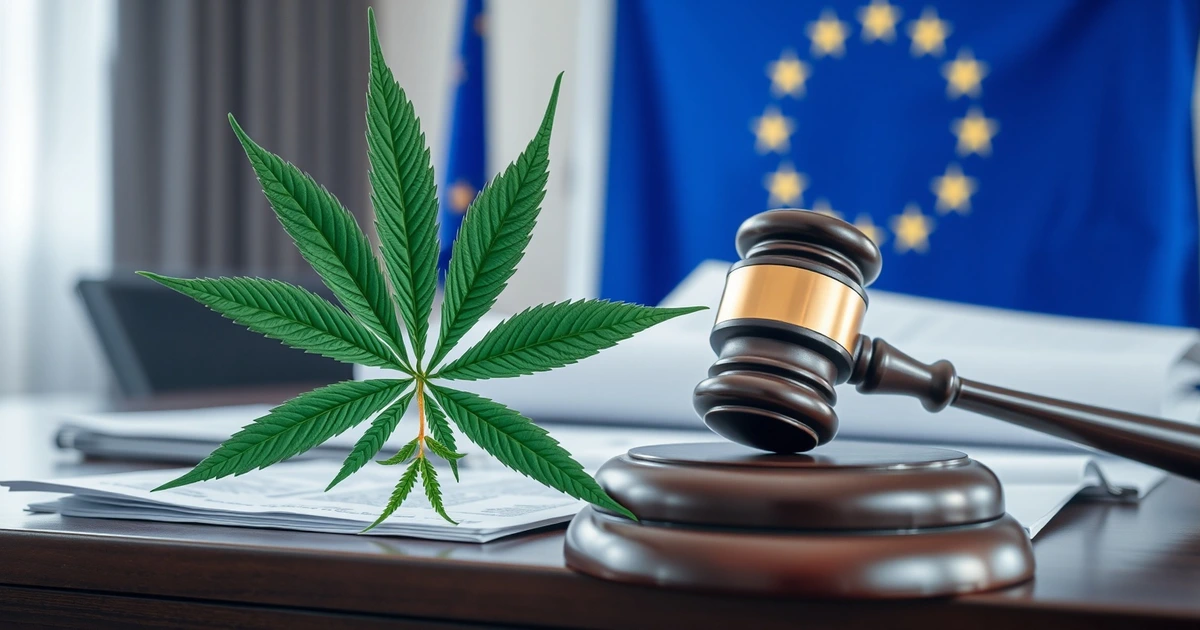
EU CBD Novel Food Regulation 2026: Leitfaden Zur Bewertung Und Umsetzung
Die Regulierung von Cannabidiol in der Europäischen Union hat 2026 einen kritischen Wendepunkt erreicht. Während die Europäische Kommission allein in den ersten Monaten dieses Jahres 12 CBD-bezogene Verfahren eingestellt hat, stehen Hersteller und Antragsteller vor der Herausforderung, die strengen Anforderungen der Novel Food Regulation zu erfüllen. Dieser Leitfaden bietet Ihnen eine systematische Übersicht der aktuellen EFSA-Bewertungen, der provisorischen Sicherheitswerte und der konkreten Schritte zur erfolgreichen Marktzulassung.
Einleitung: Novel Food Regulation 2026 und CBD as a novel food
Die Novel Food Regulation bildet das regulatorische Fundament für alle Lebensmittel und Zutaten, die vor dem 15. Mai 1997 in der EU nicht in bedeutendem Maße von Menschen konsumiert wurden. CBD fällt genau in diese Kategorie, sobald es isoliert oder extrahiert in Formen verwendet wird, die für food products oder Nahrungsergänzungsmittel vorgesehen sind.
Zweck dieses Leitfadens
Dieser Leitfaden richtet sich an:
Hersteller von CBD-Produkten, die den EU-Markt erschließen möchten
Regulatory-Affairs-Spezialisten in Unternehmen der Nahrungsergänzungsmittelbranche
Berater und Rechtsanwälte im Lebensmittelrecht
Qualitätsmanager in der Hanf- und CBD-Industrie
Sie erhalten konkrete Handlungsanweisungen zur Navigation durch die strengen Anforderungen, damit Ihre Produkte nicht zu den eingestellten Verfahren gehören, die 2026 den Markt geprägt haben.
Anwendungsumfang unter der Novel Food Regulation 2026
Die Verordnung (EU) 2015/2283 definiert den rechtlichen Rahmen für die Marktzulassung von CBD als Novel Food. Die Anforderungen gelten spezifisch für:
Produktkategorie | Anwendungsbereich | Regulatorische Anforderung |
|---|---|---|
Isoliertes CBD | Reine CBD-Extrakte >95% | Vollständiges NF-Dossier erforderlich |
Breitspektrum-Destillate | CBD mit Minor-Cannabinoiden | NF-Antrag mit erweiterter Charakterisierung |
CBD-Öle | Trägeröl-basierte Formulierungen | NF-Antrag als Zutat, nicht Fertigprodukt |
CBD-Tinkturen | Alkohol-basierte Extrakte | Vollständige Zusammensetzungsanalyse |
Die obligatorische Marktzulassung erfordert umfassende Sicherheitsdossiers, die über die Behörden der Mitgliedstaaten bei der Europäischen Kommission eingereicht werden. Ein kritischer Punkt: Der Hanf muss aus zugelassenen Sorten mit einem THC content unter 0,2-0,3% stammen – je nach nationaler Toleranz des jeweiligen member states.

Die regulatorische Entwicklung geht auf 2019 zurück, als die European Commission erstmals CBD-Extrakte als neuartige Lebensmittel einstufte. Der boomende Markt führte bis 2022 zu einem Rückstau von über 100 Anträgen. Viele davon waren unvollständig und führten zur Einstellung der Verfahren. Diese Historie unterstreicht die Notwendigkeit sorgfältiger Vorbereitung für jeden Antragsteller, der CBD products erfolgreich auf den Markt bringen möchte.
European Food Safety Authority (Food Safety Authority EFSA): Assessment Of Cannabidiol CBD As A Novel Food
Die European Food Safety Authority EFSA fungiert als unabhängiger wissenschaftlicher Berater der Europäischen Union. Ihre Rolle bei der Bewertung von cannabidiol cbd als neuartiges Lebensmittel ist zentral für jeden Zulassungsprozess.
EFSA-Rolle bei der Bewertung
Die EFSA führt auf Antrag der European Commission Risikoabschätzungen durch. Das zuständige Gremium ist das Panel on Nutrition, Novel Foods and Food Allergens (NDA-Panel). Dieses Expertengremium prüft:
Toxikologische Daten aus Tier- und Humanstudien
Zusammensetzungsbezogene Analysen der eingereichten Produkte
Expositionsdaten zur geschätzten Verbraucheraufnahme
Stabilität und Herstellungsprozesse
Die scientists des NDA-Panels werten alle eingereichten Unterlagen nach standardisierten Protokollen aus, um Sicherheitsbewertungen abzuleiten, die als Grundlage für Zulassungsentscheidungen dienen.
Zentrale Aussagen der EFSA zum CBD-NF
In ihrer 2026 aktualisierten Stellungnahme hat die EFSA mehrere Kernpunkte zur Sicherheit von CBD formuliert:
Eingeschränkter Anwendungsbereich: Die Bewertung gilt ausschließlich für hochreine, synthetische oder isolierte CBD-Formulierungen
Ausschluss von Pflanzenextrakten: Aufgrund der Variabilität von Minor-Cannabinoiden und Verunreinigungen sind Vollspektrum-Extrakte von der Bewertung ausgeschlossen
Vulnerable Gruppen: Kinder sowie schwangere oder stillende Frauen sind aufgrund fehlender Daten explizit von den Sicherheitsaussagen ausgenommen
Vorläufiger Charakter: Der festgelegte Sicherheitswert bleibt provisorisch, bis bestimmte Datenlücken geschlossen sind
Der provisorische Basiswert
Die EFSA hat einen provisional safe intake level von 0,0275 mg kg Körpergewicht pro Tag festgelegt. Für einen 70 kg adult entspricht dies etwa 1,925 mg day – eine Dosis, die deutlich unter den in der Industrie oft zitierten Werten von bis zu 300 mg per day liegt.
Dieser konservative Ansatz reflektiert die begrenzte Datenlage und den evidenzbasierten Charakter der EFSA-Bewertungen.
Interne EFSA-Dokumente zur weiteren Recherche
Für vertiefte Recherchen stehen folgende Dokumente zur Verfügung:
Dokument | DOI/Referenz | Inhalt |
|---|---|---|
Aktualisierte Stellungnahme 2026 | DOI: 10.2903/j.efsa.2026.9862 | Vollständige risk assessment mit provisorischem Wert |
Ursprüngliche Bewertung 2020 | DOI: 10.2903/j.efsa.2020.6195 | Erste safety assessment und identifizierte Lücken |
NDA-Panel Modellierungsberichte | EFSA Open Data Portal | Rohdatensätze zur Benchmark-Dose-Modellierung |
Diese Ressourcen bilden die wissenschaftliche Grundlage für jeden Antragsteller, der die EFSA-Anforderungen verstehen und erfüllen möchte.

A provisional safe intake level für Cannabidiol CBD (intake level)
Der provisorische sichere Aufnahmewert für CBD stellt das Herzstück der aktuellen regulatorischen Landschaft dar. Das Verständnis seiner Herleitung ist essentiell für die Produktentwicklung und Dosierungsplanung.
Herleitung des Werts 0,0275 mg/kg KG pro Tag
Die EFSA wandte die Benchmark-Dose-Modellierung (BMD) als methodischen Ansatz an. Der Ausgangspunkt waren Daten aus wiederholten Dosis-Toxizitätsstudien bei Ratten. Die empfindlichsten nachteiligen Effekte zeigten sich als:
Leberenzymerhöhungen bei Hochdosis-Gaben
Histopathologische Veränderungen im Lebergewebe
Der BMDL10 – die untere Vertrauensgrenze der Benchmark-Dose für eine 10%ige Wirkung – wurde mit 0,275 mg kg body weight per day berechnet. Dieser Wert diente als Ausgangspunkt für die weitere Berechnung unter Anwendung von Sicherheitsfaktoren.
Angewendete Unsicherheitsfaktoren
Die EFSA wendete einen zusammengesetzten uncertainty factor von 10-fach an. Dieser setzt sich wie folgt zusammen:
Faktor | Multiplikator | Begründung |
|---|---|---|
Interspezies-Extrapolation | 3-fach | Übertragung von Ratte auf Mensch |
Intraspezies-Variabilität | 3-fach | Unterschiede innerhalb der menschlichen Population |
Datenlücken | ~1,1-fach | Verbleibende Unsicherheiten im Datenbestand |
Gesamt | 10-fach | Kombinierter safety factor |
Die Anwendung dieses Faktors auf den BMDL10 von 0,275 mg/kg führte zum endgültigen provisorischen Wert von 0,0275 mg kg Körpergewicht pro Tag.
Diese Berechnung gewährleistet einen Expositionsspielraum, der weit über den typischen Verbraucheraufnahmen aus Nahrungsergänzungsmitteln liegt – ein konservativer Ansatz angesichts der widersprüchlichen Beobachtungsdaten aus Humanstudien.
Zielgruppe des provisorischen Intake Level
Der festgelegte Wert richtet sich an die allgemeine erwachsene Bevölkerung. Explizit ausgeschlossen sind:
Kinder und Jugendliche: Fehlende Daten zu Entwicklungseffekten
Schwangere Frauen: Keine Reproduktionstoxizitätsdaten für diese Gruppe
Stillende Frauen: Unbekannte Übertragung über Muttermilch
Personen mit Lebererkrankungen: Erhöhte Sensitivität möglich
Für einen 70 kg adult entspricht der Wert etwa 1,925 mg day – eine Aufnahme, die in der Praxis durch sorgfältige Produktformulierung eingehalten werden muss.

Beschränkung auf hochreine CBD-Formulierungen
Die EFSA betont nachdrücklich, dass der provisorische Wert ausschließlich für hochreines CBD gilt. Die Anforderungen sind:
Reinheit: >95-99% CBD-Gehalt
THC-Anteil: Minimal bis nicht nachweisbar
Minor-Cannabinoide: Auf ein Minimum reduziert
Verunreinigungen: Unter definierten Grenzwerten
Pflanzenextrakte mit ihrer natürlichen Variabilität sind von dieser Bewertung ausgenommen. Der reason dafür liegt in der Unmöglichkeit, konsistente Sicherheitsaussagen für variable Zusammensetzungen zu treffen.
Diese Einschränkung hat direkte Auswirkungen auf die Produktentwicklung: Unternehmen, die den EU-Markt anstreben, müssen in hochreine Isolate oder synthetisches CBD investieren, um den regulatorischen Anforderungen zu entsprechen.
Food supplements: Bedingungen, Zulassung und Zielpopulation
Die Zulassung von CBD als food supplement unter der Novel Food Regulation erfordert die Erfüllung spezifischer Voraussetzungen. Dieser Abschnitt fasst die wesentlichen Anforderungen zusammen.
Zulassungsvoraussetzungen für Food Supplements
Die Novel Food application für CBD-haltige Nahrungsergänzungsmittel muss folgende Kriterien erfüllen:
Zusammensetzungskonsistenz
Chargentests zur Dokumentation gleichbleibender Qualität
Vollständige Cannabinoidprofile mittels HPLC-Analyse
Nachweis der Reproduzierbarkeit des production process
Stabilitätsnachweise
Lagerstabilität unter EU-Bedingungen (25°C/60% RH für 24 Monate)
Dokumentation der Abbauprodukte über die Lagerzeit
Haltbarkeitsangaben basierend auf realen Daten
THC-Begrenzung
Maximale THC-Aufnahme: <0,2 mg day gemäß EFSA-Expositionsszenarien
Regelmäßige Chargentests zur Verifizierung
Dokumentation der Hanfsorte und Herkunft
Dosierungskonformität
Einhaltung des provisorischen sicheren Niveaus
Klare Dosierungsanweisungen für Verbraucher
Warnung vor Überdosierung
Die Europäische Kommission hat in Entscheidungen von Februar und März 2026 mehrere Verfahren eingestellt, darunter Fälle für isoliertes cannabidiol (NF/2020/2122), Tinkturen (NF/2020/2144) und Breitspektrum-Destillate (NF/2021/0044). Der Hauptgrund: unzureichende Daten zu safety, Zusammensetzung und Einhaltung der Antragsregeln.
Erlaubte Reinheitsanforderungen
Die Reinheitsanforderungen für CBD als food ingredient sind streng definiert:
Kontaminant | Grenzwert | Analysemethode |
|---|---|---|
Blei (Pb) | <0,1 mg/kg | ICP-MS |
Cadmium (Cd) | <0,05 mg/kg | ICP-MS |
Pestizide | Gemäß Verordnung 396/2005 | GC-MS/LC-MS |
Lösungsmittelrückstände | Produktspezifisch | GC-MS |
Mikroorganismen | Gemäß EU-Standards | Kultivierung/PCR |
Die Cannabinoid-Profilierung erfolgt durch LC-MS/MS und muss das vollständige Spektrum der enthaltenen Cannabinoide darstellen. Unabhängige, akkreditierte Labore müssen diese Analysen durchführen.
Empfohlene Kennzeichnungshinweise für Hersteller
Die Kennzeichnung von CBD food supplements muss der Verordnung 1169/2011 über Lebensmittelinformationen für Verbraucher entsprechen. Folgende Elemente sind essentiell:
Dosierungsanweisungen
“Überschreiten Sie nicht X mg CBD per day”
Klare Angabe der CBD-Menge pro Portion
Maximale Tagesdosis in Portionen ausgedrückt
Bevölkerungsbeschränkungen
“Nicht für Kinder geeignet”
“Nicht für Schwangere und Stillende”
“Außerhalb der Reichweite von Kindern aufbewahren”
Warnhinweise
“Konsultieren Sie einen Arzt bei Einnahme von Medikamenten wegen potenzieller CYP450-Interaktionen”
Hinweis auf Novel-Food-Status
Verweis auf die Notwendigkeit ärztlicher Beratung bei Vorerkrankungen
Diese Kennzeichnungsanforderungen dienen nicht nur der rechtlichen Compliance, sondern bauen auch Vertrauen bei Verbrauchern auf und minimieren das Risiko behördlicher Maßnahmen.
Datenlücken (data gaps) und Pflichten der Antragsteller
Die EFSA hat klare Prioritäten für die Schließung bestehender data gaps formuliert. Applicants müssen diese Lücken adressieren, um ihre Dossiers über das Risiko eines Verfahrensabbruchs zu heben.
Kritische Datenlücken priorisiert
Die folgende Tabelle zeigt die von der EFSA priorisierten Datenlücken:
Priorität | Datenlücke | Erforderlicher Nachweis |
|---|---|---|
1 | Chronischer Humankonsum | Klinische Studien >6 Monate bei 0,0275-0,5 mg/kg KG/Tag |
2 | Reproduktionstoxizität | Zwei-Generationen-Versuche bei Ratten (OECD 416) |
3 | Genotoxizität in vivo | Vollständiger OECD 474 Comet-Assay |
4 | Arzneimittelinteraktionen | CYP3A4- und CYP2C19-Hemmungsassays |
5 | Pharmakokinetik beim Menschen | Plasmaspiegel-Messungen in spezifischen Matrices |
Diese Lücken bestehen seit der ersten EFSA-Meinung von 2020 und verhinderten bisher die Festlegung einer vollständigen akzeptablen täglichen Aufnahme (ADI).
Geforderte toxikologische Studien
Antragsteller müssen GLP-konforme toxikologische Studien gemäß OECD-Richtlinien vorlegen:
90-Tage-Wiederholbarkeitstoxizität (OECD 408/409)
Durchführung an Nagetieren und Nicht-Nagetieren
Vollständige Histopathologie aller Organsysteme
Hämatologie und klinische Chemie
Dokumentation von Dosisabhängigkeiten
Kombinierte chronische Toxizitäts-/Karzinogenitätsstudien (OECD 453)
Langzeitexposition über 24 Monate
Tumorinzidenz-Erfassung
Überlebensdaten und Körpergewichtsentwicklung
Reproduktionstoxizität (OECD 416)
Zwei-Generationen-Design
Fertilitätsparameter bei beiden Geschlechtern
Entwicklungsendpunkte der Nachkommen
Diese Studien müssen in GLP-zertifizierten Einrichtungen durchgeführt werden, um von der EFSA akzeptiert zu werden.

Empfohlene Studiendesigns zur Schließung der Lücken
Basierend auf den EFSA-Anforderungen werden folgende Studiendesigns empfohlen:
Humanklinische Studien
Randomisierte, placebokontrollierte Designs
Diverse Populationen (Alter, Geschlecht, genetische Variabilität)
Biomarker für Leberfunktion (ALT/AST)
Hormonelle Parameter
Neurokognitive Endpunkte
Studiendauer: Minimum 6 Monate, optimal 12 Monate
Pharmakokinetische Studien
Messung von Cmax, AUC und Halbwertszeit
Spezifische Lebensmittelmatrix (Gummibärchen vs. Öle vs. Kapseln)
Bioverfügbarkeitsbestimmung (erwartete orale Bioverfügbarkeit <20% aufgrund First-Pass-Effekt)
Genotoxizitäts-Batterie
Ames-Test (OECD 471)
In-vitro-Mikronukleustest (OECD 487)
In-vivo-Kometen-Assay (OECD 474)
Diese umfassenden Studienanforderungen erklären, warum viele der über 100 eingereichten Anträge unvollständig waren und zur Einstellung führten.
Assessment of evidence by the European Food Safety Authority based on available studies
Die Methodik der EFSA zur Bewertung von Evidenz folgt etablierten wissenschaftlichen Protokollen. Das Verständnis dieser Methodik hilft applicants bei der Vorbereitung ihrer Dossiers.
EFSA-Methodik zur Risikobewertung
Die EFSA verwendet systematische Überprüfungsprotokolle gemäß ihrer Leitlinie von 2020. Die Evidenzbewertung folgt einer klaren Hierarchie:
Randomisierte kontrollierte Studien (RCTs) am Menschen – höchste Evidenzstufe
Beobachtende Humanstudien – hohe Evidenz bei guter Methodik
Tierstudien an relevanten Spezies – Standard bei fehlenden Humandaten
In-vitro-Studien – unterstützend, nicht ausreichend allein
Für CBD greift die EFSA aufgrund spärlicher Humanendpunkte standardmäßig auf Nagetiermodelle zurück. Die meisten verfügbaren Humanstudien – beispielsweise Epilepsie-Studien bei 10-20 mg/kg/Tag – werden als für Lebensmittelanwendungen irrelevant bewertet, da pharmazeutische Reinheit und medizinische Überwachung nicht mit Nahrungsergänzungsexpositionen vergleichbar sind.
Einsatz von BMD-Modellierung
Die Benchmark-Dose-Modellierung ist ein probabilistischer statistischer Ansatz, der Dosis-Wirkungs-Kurven an kritische Endpunkte anpasst. Die EFSA verwendet die PROAST-Software mit modellgemittelten Ergebnissen zur Unsicherheitsabschätzung.
Der Prozess umfasst:
Sammlung aller verfügbaren Dosis-Wirkungs-Daten
Anpassung mathematischer Modelle an die Daten
Berechnung des BMDL (untere Vertrauensgrenze)
Modellmittelung zur Reduzierung von Unsicherheiten
Für CBD wurde der empfindlichste Endpunkt – Rattenleberhypertrophie – für die BMDL10-Berechnung herangezogen.
Relevanz von Humanstudien versus Tierstudien
Die Priorisierung von Studien erfolgt nach Spezies:
Rangfolge | Spezies | Relevanz für CBD-Bewertung |
|---|---|---|
1 | Mensch | Höchste Relevanz, aber limitierte Daten verfügbar |
2 | Hund/Minischwein | Gute metabolische Ähnlichkeit zum Menschen |
3 | Ratte | Standard-Toxikologie, Basis der aktuellen Bewertung |
4 | Maus | Unterstützend, niedrigere Priorisierung |
Die vorhandenen Humanstudien aus dem pharmazeutischen Bereich (Epidiolex-Studien) werden kritisch betrachtet, da die Dosierungen von 10-20 mg/kg/Tag weit über lebensmittelrelevanten Expositionen liegen.
Nachreichfristen und Fristen für Gutachten
Die zeitlichen Rahmenbedingungen für das Verfahren:
Mängelanforderung: Typischerweise 12-18 Monate Nachreichfrist
Vollständige Stellungnahme: 9 Monate nach Eingang kompletter Dossiers
Historische Realität: Der CBD-Rückstau hat diese Fristen auf über 2 Jahre verlängert
Antragsteller sollten diese Zeiträume in ihrer Planung berücksichtigen und proaktiv auf Mängelanfragen reagieren.
Risikomanagement und Auflagen unter der novel food regulation
Das Risikomanagement unter der novel food regulation umfasst mehrere Optionen für Behörden und Empfehlungen für Hersteller.
Empfohlene temporäre Risikomanagement-Maßnahmen
Die EFSA schlägt vor:
Beschränkung von Zulassungen auf vorläufige Stufen mit Marktüberwachung
RAPEX-Meldungen bei Überschreitungen der festgelegten Werte
Regelmäßige Nachprüfung der Marktprodukte durch zuständige Behörden
Unternehmen sollten interne Qualitätssicherungssysteme etablieren, die über die Mindestanforderungen hinausgehen.
Vorgeschlagene Labeling-Restriktionen für Supplements
Für food supplement formulations empfiehlt die EFSA:
“Vorläufige Sicherheit: max. 2 mg/Tag für Erwachsene”
Explizite Warnung vor Überschreitung
Hinweis auf den provisorischen Charakter der Bewertung
Diese Restriktionen kommunizieren transparent den aktuellen Stand der wissenschaftlichen Erkenntnisse.
Entscheidungsoptionen für Behörden
Die regulatory Landschaft bietet folgende Optionen:
Option | Beschreibung | Bedingung |
|---|---|---|
Bedingte Zulassung | Marktzugang mit Auflagen | Grunddaten vorhanden, Lücken identifiziert |
Vollständige Zulassung | Aufnahme in die Union list | Alle Datenlücken geschlossen |
Ablehnung | Keine Marktzulassung | Unzureichende Sicherheitsnachweise |
Einstellung | Verfahrensbeendigung | Fehlende Nachreichung oder fundamentale Mängel |
Die Entscheidung balanciert Innovation und Verbraucherschutz. Die hohe Zahl eingestellter Verfahren in 2026 signalisiert hohe Hürden für unvollständige Einreichungen.
Checkliste für Antragsteller by the Applicant: Dokumentation und Studienumfang
Eine systematische Vorbereitung ist der Schlüssel zum Erfolg. Diese Checkliste fasst die wesentlichen Anforderungen zusammen.
Verlangte Produktcharakterisierungen
Folgende Analysen müssen im Dossier enthalten sein:
[ ] Vollständiges physikochemisches Profil
[ ] HPLC-Analyse für CBD-Reinheit (>98% erforderlich)
[ ] GC-MS für Lösungsmittelrückstände
[ ] Vollständiges Cannabinoidprofil aller nachweisbaren Verbindungen
[ ] Stabilitätsdaten unter definierten Lagerbedingungen
[ ] Spezifikation des Herstellungsverfahrens
[ ] Chargenanalysen von mindestens 3 repräsentativen Chargen
Geforderte GLP-konforme Toxikologiestudien
Studie | OECD-Richtlinie | Mindestanforderung |
|---|---|---|
28-Tage-Oralstudien | OECD 407 | Nagetiere, beide Geschlechter |
90-Tage-Oralstudien | OECD 408 | Nagetiere mit Histopathologie |
Subchronische Toxizität | OECD 409 | Nicht-Nagetiere (Hund/Minischwein) |
Kombinierte Studie | OECD 453 | Chronische Toxizität/Karzinogenität |
Alle Studien müssen in GLP-zertifizierten Einrichtungen durchgeführt und vollständig dokumentiert werden.
Verlangte Nachweise zur Nicht-Genotoxizität
[ ] Ames-Test (OECD 471) – bakterielle Rückmutationstests
[ ] In-vitro-Mikronukleustest (OECD 487) – Chromosomenschäden
[ ] In-vivo-Kometen-Assay (OECD 474) – DNA-Strangbrüche
Negative Ergebnisse in allen drei Tests sind erforderlich für eine positive Bewertung.
Erforderliche Pharmakokinetische Daten für Zielmatrix
Die pharmakokinetischen Daten müssen spezifisch für die geplante Produktform erhoben werden:
Bioverfügbarkeitsstudien zeigen typischerweise <20% für orales CBD aufgrund des First-Pass-Effekts
Cmax (maximale Plasmakonzentration) in der Zielmatrix
AUC (Fläche unter der Kurve) zur Expositionsabschätzung
Halbwertszeit zur Beurteilung der Akkumulation
Die Matrix ist entscheidend: CBD oil verhält sich anders als Gummibärchen oder Kapseln. Jede Produktform erfordert separate Daten.

Kommunikation und nächste Schritte basierend on EFSA-Befunden
Die strategische Kommunikation der EFSA-Ergebnisse und die Planung nächster Schritte sind entscheidend für den langfristigen Erfolg im EU-Markt.
Entwurf einer Pressemitteilung für regulatorische Entscheider
Unternehmen sollten ihre Kommunikation proaktiv gestalten. Ein empfohlener Ansatz:
Kernbotschaften:
“Wir begrüßen die Festlegung eines provisorischen sicheren Aufnahmewerts durch die EFSA als wichtigen Meilenstein auf dem Weg zu sicherer Innovation. Unser Unternehmen verpflichtet sich zur Durchführung der erforderlichen Studien, um die identifizierten Datenlücken bis 2027 zu schließen.”
Elemente der Pressekommunikation:
Bekenntnis zu wissenschaftlich fundierter Compliance
Transparenz über den vorläufigen Charakter des Werts
Darstellung des eigenen Beitrags zur Datenbasis
Zeitplan für geplante Studien
Diese Kommunikation signalisiert Verantwortungsbewusstsein gegenüber Regulierungsbehörden und baut Vertrauen bei Stakeholdern auf.
Planung eines Stakeholder-Workshops zur Datennachreichung
Ein strukturierter Workshop kann den Datenaustausch beschleunigen und Ressourcen bündeln:
Teilnehmer:
Industrievertreter und Antragsteller
Wissenschaftliche Berater und Toxikologen
Vertreter der zuständigen Behörden in member states
NGOs mit Expertise in Lebensmittelsicherheit
Agenda-Vorschlag:
Zeitblock | Thema | Ziel |
|---|---|---|
Vormittag | Stand der EFSA-Bewertung | Gemeinsames Verständnis schaffen |
Mittag | Identifizierte Datenlücken | Priorisierung diskutieren |
Nachmittag | Studiendesigns | Methodische Abstimmung |
Abschluss | Zeitplan und Ressourcen | Verbindliche Vereinbarungen |
Der Workshop sollte konkrete Vereinbarungen zur gemeinsamen Finanzierung kostspieliger Studien wie der Zwei-Generationen-Studie (OECD 416) anstreben.
Fahrplan für Folgeanträge unter der Regulation
Ein realistischer Zeitplan für die kommenden Jahre:
Q3 2026
Einreichung von reinheitsüberprüften Dossiers
Aktualisierung der Produktcharakterisierungen
Nachweis der Chargenkonsistenz
Q1 2027
Vorlage abgeschlossener Genotoxizitätsstudien
In-vivo-Kometen-Assay-Ergebnisse
Aktualisierte Mikronukleustestdaten
Q4 2027
Einreichung chronischer Toxizitätsstudien
Humanklinische Pilotdaten
Pharmakokinetik in Zielmatrices
2028
Angestrebte Aufnahme in die Union list
Vollständige Marktzulassung für konforme Produkte
Etablierung als zugelassenes novel food
Dieser Fahrplan ist ambitioniert, aber erreichbar bei frühzeitigem Studienbeginn und ausreichenden Ressourcen.
Trends und Ausblick für Europe
Die Entwicklung in europe zeigt folgende Tendenzen:
Harmonisierung: Zunehmende Angleichung der Durchsetzung zwischen member states
Nationale Unterschiede: Strengere THC-Vorschriften in Frankreich versus Malta bleiben bestehen
Prognosen: Bei Schließung der Datenlücken 2026-2028 könnte der sichere Wert auf 1-5 mg/kg angehoben werden
Risiken: Geldstrafen bis zu 300.000 € oder vollständige Marktverbote bei Non-Compliance
Germany als größter EU-Markt nimmt eine Schlüsselrolle ein. Die Abstimmung mit dem zuständigen ministry of health ist für Antragsteller essenziell.
Unternehmen, die jetzt in hochwertige Dossiers investieren, sichern sich Wettbewerbsvorteile für die kommenden Jahre. Der Markt wird transparenter für konforme Akteure, während unvollständige Einreichungen konsequent abgelehnt werden.
Wichtige Erkenntnisse
Die EFSA hat einen provisional safe intake level von 0,0275 mg/kg Körpergewicht pro Tag für hochreines CBD festgelegt – etwa 1,9 mg day für einen 70 kg adult.
Der Wert gilt ausschließlich für isoliertes, hochreines cannabidiol und schließt Pflanzenextrakte sowie vulnerable Gruppen aus.
Kritische data gaps umfassen chronische Humanstudien, Reproduktionstoxizität und umfassende Genotoxizitätsdaten.
Die European Commission hat 2026 bereits 12 CBD-Verfahren eingestellt – Hauptgrund waren unvollständige Dossiers und fehlende Compliance mit Antragsregeln.
Für die Marktzulassung sind GLP-konforme Studien gemäß OECD-Richtlinien, vollständige Produktcharakterisierungen und strikte Kennzeichnung erforderlich.
Der Fahrplan für erfolgreiche Zulassungen zielt auf eine Aufnahme in die Union list bis 2028 ab.
Fazit
Die EU CBD Novel Food Regulation 2026 stellt Unternehmen vor anspruchsvolle, aber bewältigbare Herausforderungen. Der provisorische sichere Aufnahmewert der EFSA markiert einen wichtigen Meilenstein – er ist konservativ, aber wissenschaftlich fundiert und bietet einen klaren Rahmen für Produktentwicklung und Dosierung.
Die hohe Zahl eingestellter Verfahren unterstreicht die Notwendigkeit sorgfältiger Vorbereitung. Unternehmen, die in vollständige Dossiers, GLP-konforme Studien und transparente Kommunikation investieren, werden von der zunehmenden Marktklarheit profitieren.
Beginnen Sie jetzt mit der Gap-Analyse Ihrer bestehenden Daten, engagieren Sie spezialisierte Regulatory-Affairs-Berater und starten Sie die Planung der erforderlichen Studien. Der world of CBD in der EU entwickelt sich dynamisch – wer heute die Grundlagen legt, sichert sich die Marktposition von morgen.
Related Articles
Frequently Asked Questions

Written by
The Green Treasure Editorial Team
Independent cannabis journalism backed by science. We cover terpenes, vaporizers, edibles, growing and health.
Stay in the green loop
Expert guides, terpene science, growing tips, and gear reviews — delivered to your inbox. No spam, ever.
No spam. Unsubscribe anytime.