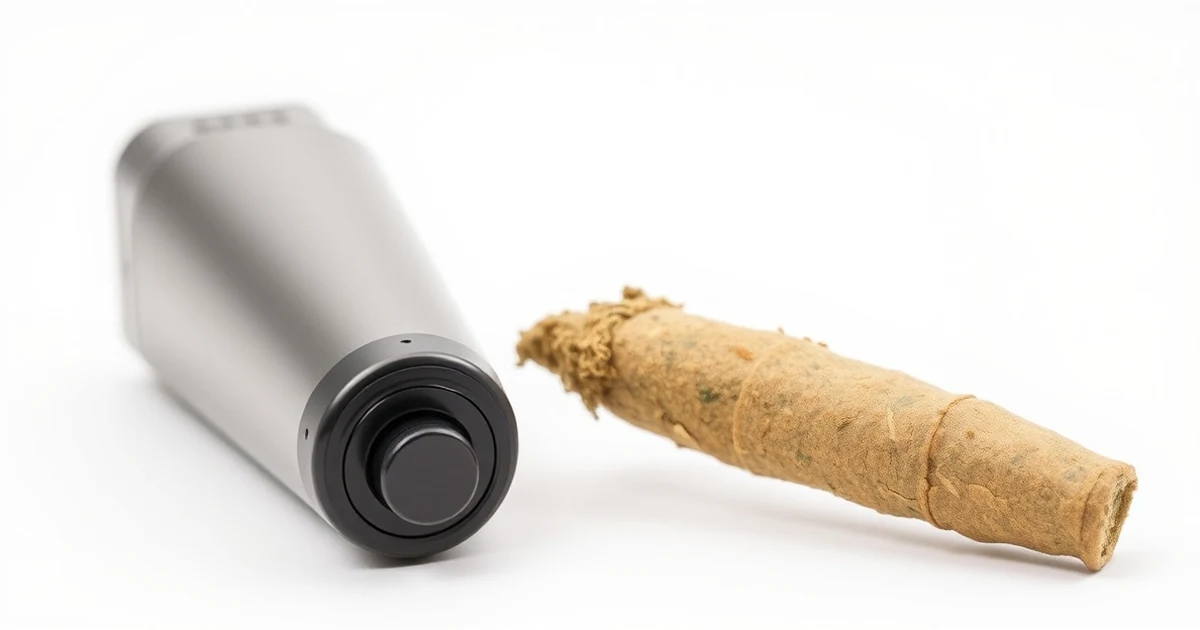
Vaping vs. smoking cannabis — which is less harmful, which gets you higher, and which is better for your lungs? This guide compares both cannabis consumption methods overviews across all major dry herb vaping health risks and experience dimensions, drawing on peer-reviewed research to help you make an informed choice.
The Core Difference: Combustion vs. Vaporization
The fundamental distinction is vaporizer temperature guide. Smoking burns cannabis at 800–900°C, creating combustion byproducts including carbon monoxide, tar, benzene, and dozens of other toxins. Vaporization heats cannabis to 160–230°C — hot enough to release cannabinoids and cannabis terpene profiless as vapor, but below the combustion threshold that creates harmful byproducts.
 how to use a dry herb vaporizer dry herb health effects" width="1200" height="630" loading="lazy" decoding="async" />
Lung Health: What Does the Research Show?
Smoking: The Established Risks
Cannabis smoke contains many of the same toxic compounds as tobacco smoke, though cannabis smokers typically have less exposure due to lower daily consumption. Established effects include:
- Chronic bronchitis symptoms: Cannabis smokers show significantly higher rates of chronic cough, increased phlegm production, and wheezing compared to non-smokers
- Airway inflammation: Regular smoking causes visible inflammation of the large airways and vocal cords on bronchoscopy
- Lung function: A landmark study (Pletcher et al., 2012, JAMA) found that light-to-moderate cannabis smoking did not impair FEV1 or FVC — but heavy smokers showed declines
- Cancer risk: Evidence remains inconclusive due to confounding factors, but the combustion byproducts present theoretical carcinogenic risk
Vaping: The Evidence Base
Research on cannabis vaping is more limited than for tobacco, but the available evidence is promising for harm reduction:
- Reduced bronchitis symptoms: A 2007 MAPS/NORML study found that cannabis users who switched to vaporizers reported significantly fewer respiratory symptoms including cough, phlegm, and wheezing
- Lower CO exposure: Vaporization produces dramatically less carbon monoxide — in some studies, comparable to non-smoking control groups
- Cleaner vapor composition: Vaporizer vapor contains primarily cannabinoids and terpenes; smoking produces up to 88 different compounds, many toxic
- Temperature control: Good vaporizers allow precise temperature control, giving users influence over the balance of cannabinoids and terpenes


Potency and Bioavailability: Which other cannabis consumption methods Delivers More?
Vaping Is More Efficient
Studies consistently show that vaporization delivers more cannabis and sleep quality per gram of cannabis than smoking. Key data:
- Vaporization bioavailability: approximately 30–50% of available THC
- Smoking bioavailability: approximately 15–35% (wide variation due to side-stream smoke loss, combustion destruction of cannabinoids)
- A 2018 Johns Hopkins study found that cannabis-naive participants who vaped the same dose of cannabis showed significantly higher blood THC levels and stronger subjective effects than those who smoked the same amount
Practical Implication
If you switch from smoking to vaping, you may need less cannabis to achieve the same effect. Starting with smaller amounts than you normally smoke is recommended, especially with high-quality convection vaporizers.
Onset, Duration, and Experience Quality
| Factor | Smoking | Vaping |
|---|---|---|
| Onset time | Seconds to 2 minutes | Seconds to 5 minutes |
| Peak effects | 15–30 minutes | 20–45 minutes |
| Duration | 1.5–3 hours | 2–4 hours |
| Terpene experience | Largely destroyed by combustion | Preserved at lower temps (160–180°C) |
| Flavor | Smoky, charred | Clean, strain-specific flavors |
| Smell | Strong, persistent | Milder, dissipates faster |
Throat and Airway Irritation
Hot combustion smoke (800–900°C) is highly irritating to the throat and airways. Most vaporizers deliver vapor at 160–230°C — still warm, but significantly less irritating. Many users who experienced chronic throat irritation from smoking report improvement after switching to vaporization. Water cooling attachments can further reduce temperature and irritation.
Secondhand Exposure
Secondhand cannabis smoke contains the same combustion byproducts as directly inhaled smoke. Vaporizer exhaust contains primarily cannabinoids and terpenes at much lower concentrations. For households with non-users, children, or immunocompromised individuals, vaporizers represent a meaningfully lower secondhand exposure risk.

Cost Comparison Over Time
Vaporizers require an upfront investment (€80–500+ depending on quality), but the improved efficiency and ABV (already vaped bud) reuse options often result in lower cannabis consumption costs over time:
- A good vaporizer can reduce cannabis consumption by 20–40% compared to smoking
- ABV (already vaped bud) retains 15–30% of cannabinoids and can be used in edibles — further extending value
- No combustibles needed (papers, filters, lighters)
Who Should Definitely Consider Switching?
- Anyone with respiratory conditions (asthma, COPD, chronic bronchitis)
- Regular, daily cannabis users where cumulative combustion exposure is highest
- Those concerned about discretion — vapor smell is milder and dissipates faster
- People who want to explore specific terpene profiles and strain flavors
- Those using cannabis medicinally who want more predictable dosing
Limitations of the Current Research
Important caveats: Most cannabis vaping studies use older technology or tobacco e-cigarettes as proxy. Long-term studies (10+ years) on dry herb vaporizer use are lacking. Studies often use different products, temperatures, and usage patterns making direct comparisons difficult. The "e-cigarette EVALI" crisis (2019) was caused by vitamin E acetate in illicit cartridge products — not dry herb vaporization, with which it is sometimes confused.
The Verdict
Based on the available evidence, dry herb vaporization is consistently associated with lower respiratory harm than smoking. It delivers cannabinoids more efficiently, preserves terpenes better, produces less secondhand exposure, and causes fewer bronchitis-type symptoms. It is not risk-free — inhalation of any substance carries potential risks — but it represents a meaningful harm reduction step compared to combustion. For daily or regular users, the long-term respiratory benefits of switching are well-supported by current research.
Key Takeaways
- Smoking burns at 800–900°C creating toxic byproducts; vaping operates below combustion at 160–230°C
- Vaping delivers 30–50% THC bioavailability vs. 15–35% for smoking — more efficient per gram
- Research shows reduced bronchitis symptoms, less CO exposure, and less airway inflammation with vaping
- Terpenes are largely destroyed by combustion; preserved at lower vaporization temperatures
- The EVALI crisis was caused by illicit cartridges with vitamin E acetate — not dry herb vaporizers
Related Articles
Frequently Asked Questions

Written by
The Green Treasure Editorial Team
Independent cannabis journalism backed by science. We cover terpenes, vaporizers, edibles, growing and health.
Stay in the green loop
Expert guides, terpene science, growing tips, and gear reviews — delivered to your inbox. No spam, ever.
No spam. Unsubscribe anytime.