Two Years of Germany's Ekocan report confirms no harm from legalisation: What the Data Actually Shows
On April 1, 2024, Germany enacted the Konsumcannabisgesetz (KCanG) — the Cannabis Act — decriminalising personal possession and enabling cannabis cultivation associations for adult consumers. Two years on, the government-mandated Ekocan consortium has published a comprehensive 222-page evaluation report. The findings may surprise anyone who followed the heated political debate: most of the harms critics predicted have not materialised, while structural gaps in legal supply remain the Act's most significant shortcoming.
This article breaks down what the data shows, what it means for German consumers, and why the next phase of reform may be the most consequential yet.
The Ekocan Report: Germany's Most Comprehensive Cannabis Evaluation
The Ekocan consortium — a government-commissioned group of researchers, public health experts, and economists — released their second annual evaluation in April 2026. The 222-page document draws on multiple data streams: wastewater analysis across 15 German cities (the AMoCan programme), national survey data, health system records, law enforcement statistics, and a detailed analysis of the emerging legal supply chain.

What makes this evaluation significant is its methodological rigour. Rather than relying on self-reported consumption surveys alone, it cross-references biological markers (via wastewater monitoring), healthcare utilisation data, and market supply figures. This multi-modal approach gives policymakers — and the public — a far more accurate picture than surveys alone could provide.
Youth Cannabis Use: The Headline Finding
Before the KCanG was passed, opponents argued loudly that legalisation would expose young people to greater risks, normalise use, and trigger a surge in adolescent consumption. The data tells a different story.
According to the Ekocan evaluation, youth cannabis use has remained stable or declined slightly since the Act came into force. Risk perception among young people has remained stable or even increased slightly — suggesting that the regulatory framework, combined with public health messaging, has not made cannabis appear more harmless to younger cohorts.
This finding aligns with international evidence from jurisdictions like Canada, Colorado, and Uruguay, where adult-use legalisation was not associated with significant increases in adolescent use rates. The key mechanism appears to be that formal regulation replaces the uncontrolled informal market where age verification is non-existent.
Ekocan recommends strengthening early intervention programmes and increasing addiction counselling funding targeted at young adults — not because the data shows a crisis, but as a precautionary measure given the evolving legal landscape.


Adult Consumption: No Surge, Just Stability
Adult cannabis use has shown a slight increase in lifetime and recent-use metrics, but evaluators note this is consistent with pre-existing trends observed before the Act came into force. The wastewater monitoring programme — which provides near-real-time biological consumption data across 15 German cities — detected no short-term consumption spike following legalisation.

This is a crucial methodological point. Consumer surveys are susceptible to reporting bias: people may have been reluctant to admit cannabis use when it was illegal. Post-legalisation survey increases can reflect improved reporting rather than genuine consumption growth. The AMoCan wastewater data, which is not subject to this bias, confirms that aggregate consumption has not meaningfully changed.
The Black Market: Partial Progress, Structural Limits
One of the KCanG's central objectives was displacing illegal supply with regulated alternatives. Here, the picture is mixed — not because the policy has failed, but because legal supply channels remain severely underdeveloped.
By October 2025, only 366 cannabis cultivation associations (Anbauvereinigungen) had received approval nationwide — a figure that has since risen above 400. However, maximum penetration of these legal channels reached just 3.5% of consumers in the second half of 2025. The most common source of cannabis for consumers remains social supply (informal sharing between adults), cited by 35.2% of consumers.
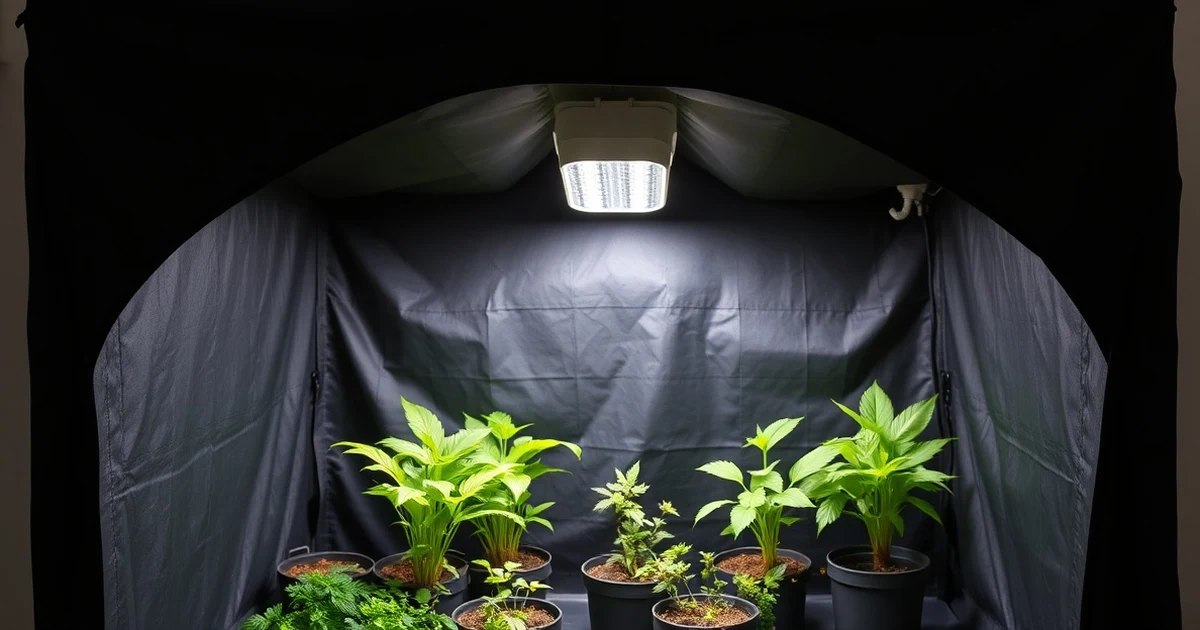
Remarkably, home cultivation has surged significantly: from 5.4% of consumers primarily growing their own cannabis in the first half of 2024 to 21.4% in the second half of 2025. While not the intended outcome of the legislation, this shift represents genuine movement toward legal, self-sourced supply rather than illicit market purchasing.
The BvCW (Germany's cannabis industry association) has been direct: "One of the core objectives of the Cannabis Act is the displacement of the black market and organised crime. But a key element is still absent: the scientific model projects for regulated cannabis dispensing." Until commercial retail channels open — the so-called Phase 2 of German cannabis reform — the illegal market will retain a structural advantage in accessibility and price.

Medical Cannabis: The Market That More Than Doubled
If there is one unambiguous success story in the two-year report, it is the medical cannabis market. Since cannabis was removed from the narcotics schedule in Germany (effective March 2024), access has expanded dramatically:

- Up to 200 tonnes of medicinal cannabis were available in 2025
- Domestic production reached 2.6 tonnes (still a fraction of demand, but growing)
- The medical cannabis market more than doubled in size year-on-year
- Medical cannabis now fulfils an estimated 9–13% of total cannabis demand (estimated at 670–823 tonnes annually)
The Ekocan report notes that medical and recreational cannabis markets operate through "mutual interdependence" rather than as entirely separate segments. Medical cannabis has served an important supply function, reducing reliance on illegal sources for patients with legitimate needs who previously had no affordable legal option.
However, evaluators also flag structural issues in the medical market: high-potency medical cannabis flowers (THC >10–15%) carry elevated risk profiles, and there is insufficient clinical evidence to support broad prescribing at these potencies. The report recommends implementing THC content guidance and strengthening pharmaceutical advertising enforcement.
Organised Crime: Reduced Pressure, But Not Eliminated
Law enforcement reports a reduction in investigative pressure on cannabis-related organised crime networks — a positive development, though offset by a concerning finding: early signs suggest organised criminal groups are attempting to participate in the legal market, potentially through front associations or by supplying cultivation associations with illegal product.
Officers surveyed expressed broadly negative views about the KCanG's effects on their ability to pursue organised crime networks — not because crime increased, but because the evolving legal framework has created ambiguity in enforcement. This underscores the importance of robust regulatory oversight and law enforcement capacity specifically targeted at the legal cannabis supply chain.
What Critics Predicted vs. What Actually Happened
It is worth reviewing the specific harms that opponents of the Cannabis Act predicted, set against what the two-year evaluation actually found:

- Youth use surge → Not observed. Stable or slight decline.
- Hospital admissions spike → Not observed. No major increase in cannabis-related health incidents, emergency calls, or hospitalisations.
- Gateway drug effect acceleration → No evidence in current data.
- Normalisation of drug use among minors → Risk perception among youth stable or slightly increased — opposite of normalisation effect.
- Organised crime expansion → Mixed. Partial black market displacement, with caution needed as illicit actors probe the legal market.
Finn Hänsel, CEO of Sanity Group — one of Germany's leading cannabis companies — was measured in his assessment: "Two years after the Cannabis Act took effect, one thing is obvious: the reform deserves a serious, scientifically based evaluation, not a rushed political change of course."

The Structural Gap: Legal Supply Cannot Meet Demand
The most consequential finding in the Ekocan report is not about harm — it is about supply. The fundamental problem with Germany's current cannabis policy framework is that legal access channels cover a tiny fraction of actual demand.
With only 400+ cultivation associations operating, covering at most 3.5% of consumers, the legal framework has essentially created a highly regulated system for a very small minority of users. Everyone else either grows their own (increasingly), relies on social supply, or continues using the illegal market.
This is not a failure of the Cannabis Act's underlying philosophy — it is a consequence of the deliberately phased approach and the political decision to defer commercial retail until Phase 2. As Hänsel noted: "When legal access is restricted, demand does not disappear. It shifts back to the illegal market."
The Ekocan consortium recommends significant reform of the cultivation association framework to make it genuinely accessible, alongside designing scientifically rigorous pilot projects for controlled distribution through specialised retail outlets — the pathway toward Phase 2.
What This Means for the German Cannabis Market in 2026
The two-year evaluation arrives at a politically sensitive moment. The new German coalition government must decide whether to continue, expand, or roll back the KCanG. The data in the Ekocan report provides a clear evidence base for continuation and expansion:
- No significant harms have emerged that would justify reversal
- Medical cannabis access has dramatically improved for patients
- Youth protection metrics are stable or improving
- Legal supply is the missing piece — not the regulatory framework itself
For consumers, the near-term outlook depends heavily on political will. If Germany proceeds with Phase 2 pilot projects for licensed cannabis retail, supply constraints will ease and the illicit market's competitive advantage will shrink. If reform stalls, the current awkward equilibrium — where most consumption occurs outside legal channels despite the Act — will persist.
International Context: Germany in the European Cannabis Landscape
Germany's experience over the past two years has significant implications beyond its borders. As the European Union's largest economy, Germany's cannabis policy sets an implicit benchmark for other member states watching closely. Several EU countries — including Luxembourg, Malta, and the Netherlands — have their own cannabis reform processes underway.
The German data challenges the political consensus in conservative EU member states that any cannabis liberalisation inevitably produces youth harm and social disruption. Two years of government-mandated evaluation say otherwise, providing a robust evidence base for reform advocates across Europe.
For the EU's broader Cannabis Novel Food and EU CBD regulations affecting German consumers regulation debates — where several applications have already been rejected — the German experience also reinforces the argument that regulated frameworks, rather than prohibition, better serve public health objectives.

Key Recommendations from the Ekocan Report
The Ekocan consortium closes its 222-page evaluation with concrete policy recommendations. These are worth understanding for anyone following German cannabis policy:
- Reform the cultivation association framework to make legal access genuinely accessible to a broader consumer base, not just the minority currently enrolled
- Strengthen early intervention programmes for at-risk youth, with increased addiction counselling funding
- Design and launch scientifically rigorous pilot projects for controlled cannabis retail distribution — the essential next step toward Phase 2
- Implement THC content guidance for medical cannabis prescribing to improve risk management in clinical settings
- Enhance law enforcement capacity specifically focused on illicit actors attempting to infiltrate the legal cannabis supply chain
- Enforce pharmaceutical advertising regulations in the medical cannabis sector
Conclusion: An Evidence-Based Reform Deserves an Evidence-Based Response
Germany's Cannabis Act has now been in force for two years, and the evidence is clearer than it has ever been. The catastrophic outcomes predicted by critics have not materialised. Youth use is stable. Hospitalisations have not surged. The medical cannabis market has flourished. And the partial displacement of the illegal market, while incomplete, is real.
The Act's most significant limitation is not philosophical but practical: legal supply channels simply cannot meet consumer demand, leaving most adults outside the regulated framework. Addressing this gap — through expanded cultivation associations and ultimately commercial licensed retail — is both the logical next step and the strongest remaining tool against the black market.
For German consumers, patients, and industry stakeholders, the message from the Ekocan report is clear: the evidence supports continuing and expanding reform. What happens next depends on whether Germany's politicians are willing to let the science lead.
Sources: Ekocan Consortium Evaluation Report (April 2026); Cannabis Health News; Sanity Group press release; BvCW statements. This article is for informational purposes only and does not constitute medical or legal advice. See also: Cannabis Events 2026.
Related Articles
Frequently Asked Questions

Written by
The Green Treasure Editorial Team
Independent cannabis journalism backed by science. We cover terpenes, vaporizers, edibles, growing and health.
Stay in the green loop
Expert guides, terpene science, growing tips, and gear reviews — delivered to your inbox. No spam, ever.
No spam. Unsubscribe anytime.