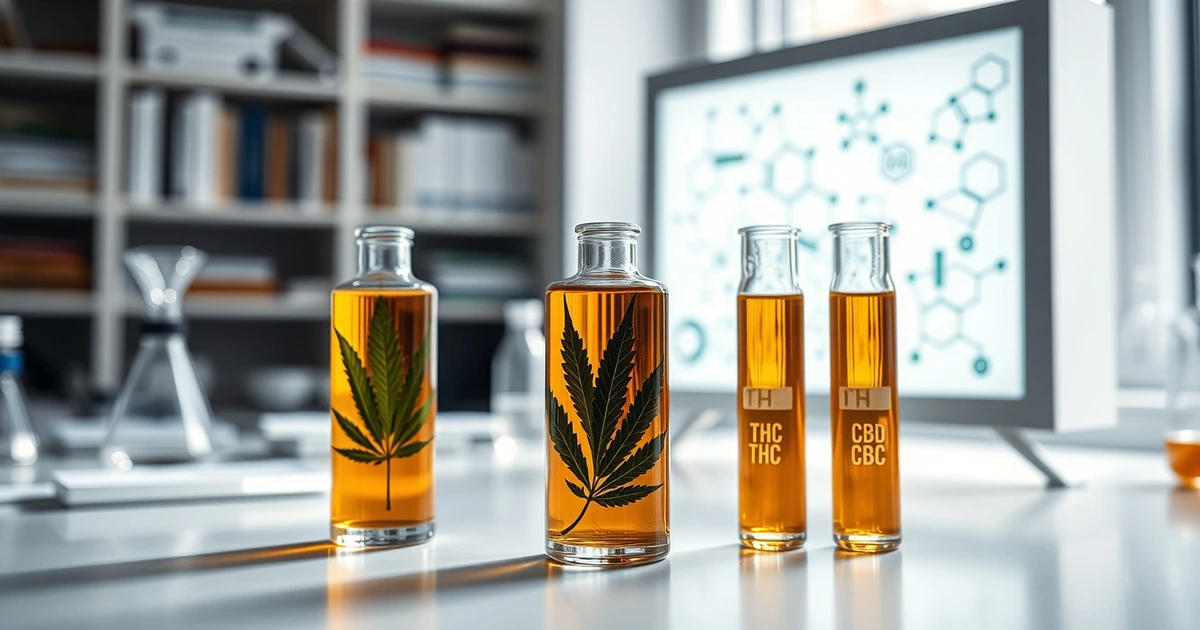
For decades, scientists have known that cannabis produces three major cannabinoids — tetrahydroCBN and other cannabinoids (THC), cannabidiol (CBD), and cannabichromene (CBC (cannabichromene)) — each with distinct biological effects. What has remained elusive until now is the precise molecular story of how the plant evolved these remarkable chemical capabilities. A landmark study published in late 2025 by recent cannabis research breakthroughsers at Wageningen University & Research has finally answered that question, offering insights that could reshape both cannabis breeding and pharmaceutical production.
What Is Cannabinoid Biosynthesis?
Cannabinoids are a class of chemical compounds produced primarily in the resin glands, or trichomes, of the cannabis plant. Their biosynthesis — the biological process by which living organisms produce complex molecules — begins with a single precursor molecule called cannabigerolic acid, or CBGA. Think of CBGA as a common parent molecule, a molecular crossroads from which the cannabis plant can take three distinct routes.
Each route is controlled by a highly specific enzyme: THCA synthase converts CBGA into the acid precursor of THC; CBDA synthase transforms CBGA into the precursor of CBD; and CBCA synthase guides it toward CBC. In finished cannabis products, these acid forms convert to their more familiar neutral forms — THC, CBD, and CBC — through heat, light, or time. The question that has long puzzled botanists and biochemists is how the cannabis plant came to possess three separate, specialized enzymes that all perform such similar but distinct chemical reactions.
The Discovery: Resurrecting Ancient Cannabis Enzymes
Robin van Velzen and Cloe Villard of Wageningen University & Research set out to answer this evolutionary puzzle using a powerful technique called ancestral sequence reconstruction. Rather than examining only the enzymes that exist in cannabis plants today, the scientists worked backward through evolutionary time, analyzing the DNA of modern cannabis and related plants to infer what the genes — and the enzymes they encoded — looked like millions of years ago. They then synthesized these reconstructed "ancestral enzymes" in the laboratory and tested their biochemical properties.
The results, published in Plant Biotechnology Journal on December 26, 2025 (DOI: 10.1111/pbi.70475), revealed a striking picture of cannabinoid evolution. The common ancestor of modern cannabis did not have three separate enzymes. Instead, it possessed a single, generalist enzyme capable of producing all three cannabinoids — THC, CBD, and CBC — simultaneously, though at lower efficiency for each. Over millions of years, through successive rounds of gene duplication, cannabis accumulated extra copies of this ancestral gene. Each duplicate copy was then free to evolve independently, gradually specializing to produce one cannabinoid more efficiently at the expense of versatility.


How Gene Duplication Shaped THC, CBD, and CBC
Gene duplication is one of evolution's most powerful creative forces. When a gene is accidentally copied, the organism now carries two functional copies. Natural selection can then act on both copies independently — one may retain the original function while the other accumulates mutations that confer new or improved capabilities. Over many generations, this process can produce a family of related genes with distinct but related functions, a phenomenon well documented across the plant kingdom.
In cannabis, the research team identified precisely this pattern. The modern THCA, CBDA, and CBCA synthases are all evolutionary relatives — members of what biologists call a gene family — descended from that ancient, generalist ancestor. Each has retained the basic enzymatic machinery for transforming CBGA but evolved a slightly different active site, the molecular pocket where the chemical reaction takes place, to favor one product over others.
This finding does more than satisfy scientific curiosity. It provides a roadmap for understanding why most commercial cannabis strains produce either THC-dominant or CBD-dominant chemotypes, with pure CBC-dominant plants being virtually unknown in nature. The CBCA synthase enzyme, which produces CBC, appears to have been subjected to different evolutionary pressures than its siblings — a detail that may help explain both its rarity and its unique biochemical properties.
Why CBC Matters — and Why It Is So Rare
CBC — cannabichromene — is the least well-known of the three major cannabinoids, yet research suggests it may possess considerable therapeutic potential. Studies indicate CBC may have anti-inflammatory, analgesic (pain-relieving), and potential antidepressant properties, though clinical evidence in humans remains limited. Despite this promise, no cannabis variety naturally produces high concentrations of CBC, making it difficult and expensive to study or to extract at pharmaceutical scale.
Here, the Wageningen study offers an exciting practical implication. Among the reconstructed ancestral enzymes the team synthesized and tested, one intermediate form — an enzyme that existed partway along the evolutionary path from the common generalist ancestor to the modern CBCA synthase — produces CBC with unexpectedly high specificity. As lead researcher Robin van Velzen explained, these reconstructed ancestral enzymes are "more robust and flexible than their descendants, which makes them very attractive starting points for new applications."
In plain terms: by reaching back in evolutionary time to retrieve an enzyme that natural selection had effectively retired in favor of more specialized descendants, the researchers may have unlocked a tool that modern cannabis evolution never developed on its own. Introducing this ancestral enzyme into cannabis plants through breeding or genetic engineering could, in principle, produce varieties with dramatically elevated CBC content — a first in cannabis cultivation.

Implications for Pharmaceutical Production and Synthetic Biology
Beyond cannabis breeding, the study has significant implications for synthetic biology — the field that engineers microorganisms to produce complex molecules industrially. The pharmaceutical industry has long been interested in producing purified cannabinoids without relying on plant cultivation, which is legally restricted in many countries, subject to agricultural variability, and difficult to scale.
The most promising platform for cannabinoid biosynthesis in microorganisms is yeast. Scientists have already demonstrated proof-of-concept systems in which yeast strains are engineered to convert simple sugar feedstocks into cannabinoids. However, a major technical bottleneck has been that modern THCA, CBDA, and CBCA synthase enzymes are difficult to express and fold correctly outside the cannabis plant's specialized cellular environment.
The ancestral enzymes described in the Wageningen study appear to sidestep this problem. Being more generalist and structurally robust than their modern descendants, they fold more readily in yeast cells and perform their enzymatic reactions more efficiently in that foreign environment. This characteristic could make ancestral enzyme variants far more suitable for industrial bioreactor production of cannabinoids — including CBC — than anything currently available.
What This Means for Cannabis Breeders and the Industry
For plant high-terpene cannabis strainss, the research offers a new conceptual framework for developing novel cannabis chemotypes. Traditionally, breeding for cannabinoid content has involved selecting and crossing plants with naturally occurring variations in synthase gene expression — a slow process constrained by what genetics already exist in the cannabis gene pool. Understanding the precise evolutionary relationships between the synthase genes now makes it possible to design targeted breeding strategies informed by molecular biology.
The possibility of introducing reconstructed ancestral enzymes into cannabis through modern plant biotechnology tools also raises intriguing prospects for regulatory and commercial innovation. A high-CBC cannabis variety would occupy an almost entirely unexplored market niche — distinct from both THC-focused recreational products and CBD-focused wellness products, and potentially valuable as a source material for pharmaceutical research and development.
It is worth noting that the research was conducted by a university team and published in a peer-reviewed journal, placing it firmly in the domain of fundamental plant science. Translation from laboratory discovery to commercial cannabis variety development typically takes many years and involves regulatory considerations that vary widely by country and jurisdiction.
A Window Into Cannabis Evolution
At a deeper level, the Wageningen study is a testament to what modern evolutionary biology can reveal about the plants we use and cultivate. By treating cannabis not just as an agricultural commodity but as an organism shaped by millions of years of evolutionary history, van Velzen and Villard's team has opened a window into the deep past — and found there a toolkit with real-world applications for the future.
The ancestral enzymes they resurrected existed long before humans first cultivated cannabis. They were effectively lost not because they failed, but simply because evolutionary specialization replaced them with something more efficient for the plant's immediate ecological needs. Science has now brought them back, and in doing so, may have handed researchers and breeders exactly the molecular lever needed to finally unlock the potential of CBC — cannabis's most overlooked major cannabinoid.
The study, "Ancestral reconstruction reveals the evolutionary origins of cannabinoid synthases in cannabis," was published on December 26, 2025 in Plant Biotechnology Journal. DOI: 10.1111/pbi.70475.
Related Articles
Frequently Asked Questions

Written by
The Green Treasure Editorial Team
Independent cannabis journalism backed by science. We cover terpenes, vaporizers, edibles, growing and health.
Stay in the green loop
Expert guides, terpene science, growing tips, and gear reviews — delivered to your inbox. No spam, ever.
No spam. Unsubscribe anytime.