How to Identify Male Cannabis Plants: A Grower’s Guide
Growing cannabis from regular seeds means roughly half your plants will be male. If you don’t catch them early, a single male plant can pollinate your entire crop, turning resinous buds into seed-filled disappointments. This guide walks you through exactly how to identify male cannabis plants before they cause damage, whether you’re a home grower using regular seeds or a commercial cultivator running pheno hunts.
Overview: Cannabis Plant Sex and Why It Matters
Cannabis plants are dioecious, meaning individual plants develop as either male or female. Understanding cannabis plant sex is critical because only female plants produce the cannabinoid rich buds that most growers want. Male plants serve one purpose: producing pollen to fertilize female plants.
Here’s why this matters for your harvest:
Pollinated female marijuana plants divert energy from resin production to seed production
Studies show fertilized females can lose up to 90% of potential bud weight to seeds
Unpollinated female plants produce 2-3 times higher THC concentrations
Seedy buds fetch 50-80% lower market prices due to inferior quality
A single male can release enough pollen to pollinate dozens of females, producing thousands of seeds per plant.
Key Differences Between Male And Female Plants
Before diving into early identification, understanding the obvious structural differences between male and female cannabis helps you know what to look for.
Feature | Male Plants | Female Plants |
|---|---|---|
Height | 1.5-2x taller, lanky growth | Compact, bushy structure |
Internode spacing | 2-4 inches apart | 1-2 inches apart |
Fan leaves per node | 5-7 leaves | 8-12 leaves |
Main stem thickness | Up to 2cm early | Slimmer build |
Pre-flower timing | 3-4 weeks from seed | 4-6 weeks from seed |
Male cannabis plants typically reveal their plant gender 7-14 days earlier than females. During the flowering stage, males mature faster (4-6 weeks) compared to females (6-8 weeks).
Smell differences emerge late in flowering. Males emit a thicker, piney-musk scent heavy in myrcene, while female flowers produce sweeter, fruitier aromas dominated by limonene and linalool.

How To Identify Male Cannabis Plants Early
Early identification of male cannabis plants saves your grow space from contamination. Focus your inspections on pre flowers emerging at nodes—the V-shaped junctions where branches meet the main stem.
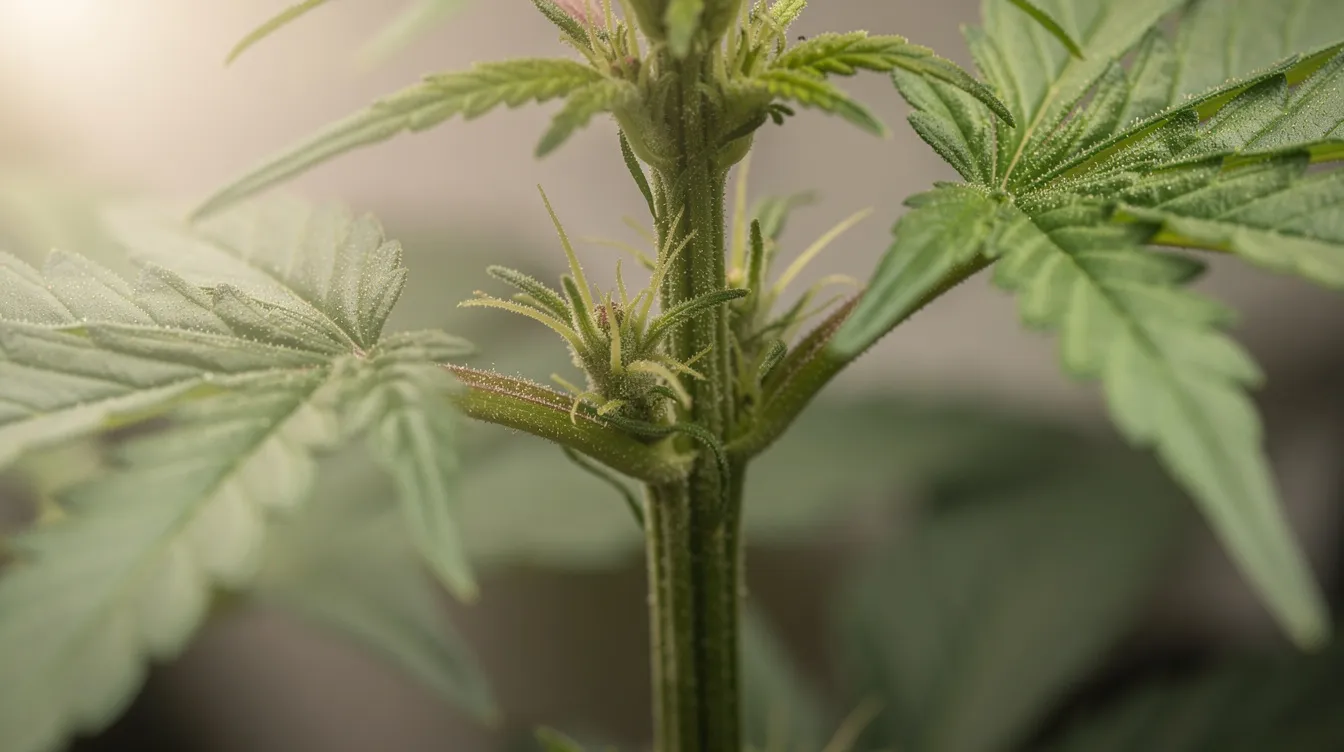
Timing guidelines:
Week 3: Begin daily inspections
Week 4: Male pre flowers become identifiable with magnification
Week 5-6: Clear visual confirmation possible
Many growers achieve 80-90% accuracy by week 4 using 30-60x magnification on upper nodes.
Pre Flowers: Read Early Sex Indicators
Pre flowers are immature floral structures 1-3mm long that signal plant sex before full flower commitment. Learning to read these saves you from waste time and ruined harvests.
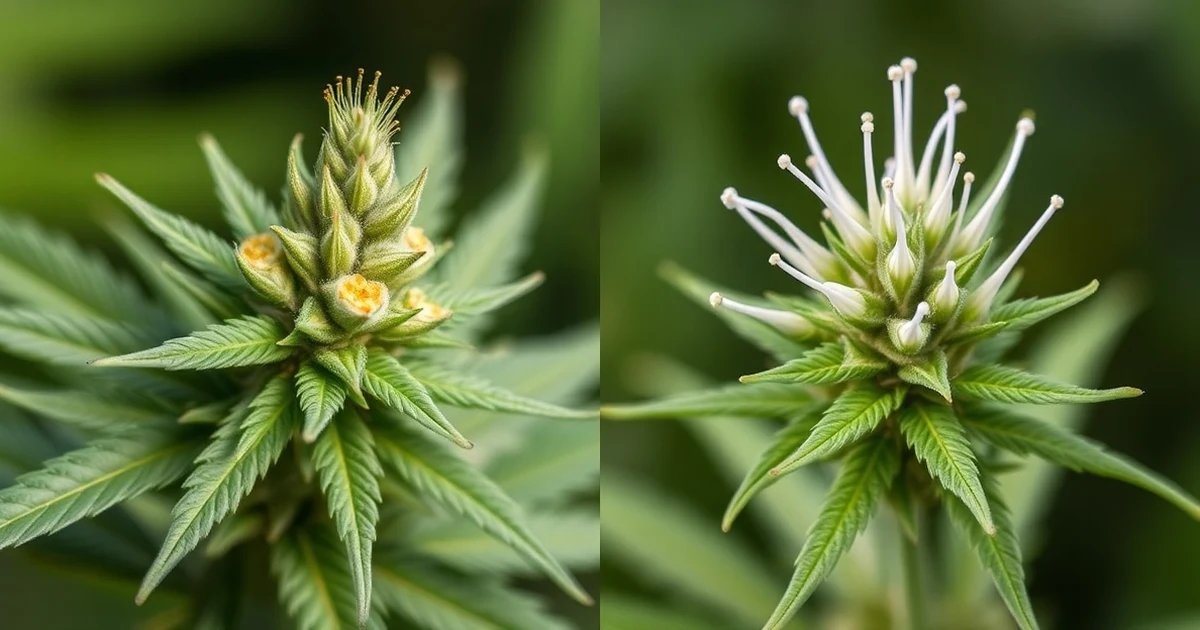
Male pre flowers appear as:
Small round sacs without any hair-like protrusions
Smooth, waxy surface under magnification
“Ball-on-a-stick” shape with short stalks (pedicel)
Clusters of 3-10 male pollen sacs per node
Female pre flower characteristics:
Teardrop-shaped female calyx structures
Two white pistils (white hairs) emerging in a V-shape
Fuzzy, resin-glanded surface
Located at the same node positions as males
The key distinction: male pre flowers are smooth and round like tiny grapes, while female pre flowers show forked white pistils protruding from a chalice shape.
Vegetative And Seedling Signs For Male Plant Detection
Even before pre flowers appear, vegetative signs can hint at cannabis plant gender. While not definitive, these patterns help cannabis growers narrow down suspects.
Node inspection from week 2:
Look for subtle dimples or bumps at axils (node junctions)
Males show vigorous upward stretch (2-4cm daily vs. females’ 1-2cm)
Sparse branching (3-5 lateral branches vs. 7-10 on females)
Leaf and growth habits:
Males typically produce narrower, longer leaflets with fewer leaves per blade
Height advantage of 20-50% by week 6
Airy, open architecture allowing more light penetration
Photograph your plants consistently using macro settings. Tracking growth via timestamped images helps you spot patterns across multiple plants.
Features Of Female Cannabis Plants For Comparison
Knowing what female cannabis plants look like helps you confirm sex through comparison rather than guessing.
Female plants feature female pistils—hair-like stigmas that collect pollen. These emerge white, then transition to orange-red as the plant matures. Female buds form as stacked calyxes swelling with resin, accumulating trichomes rich in desirable cannabinoids.
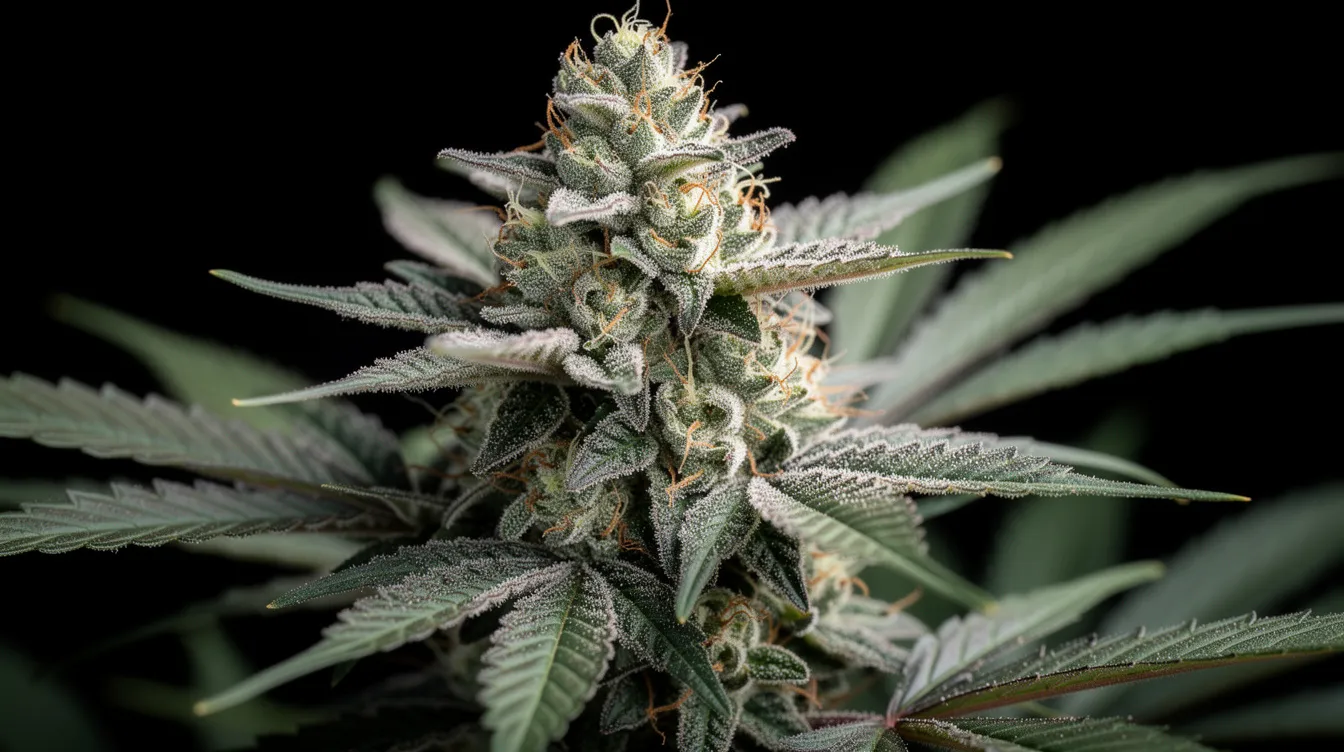
Key female indicators:
2-10 pistils per bud site arranged in V or spiral patterns
Dense bud formation with sticky resin coating
10-20% glandular trichome coverage (vs. 1-5% on males)
Resinous buds that swell progressively through flowering
Female plants produce buds containing up to 30% THC by dry weight, delivering the therapeutic benefits most growers seek.
Practical Steps To Separate Male From Female Plants
When you spot suspected male and female cannabis showing different characteristics, act quickly. Here’s your action protocol:
Isolate immediately: Bag suspected male node clusters in breathable fabric to trap any male pollen
Tag clearly: Use colored zip-ties (red for male, green for female) with date noted
Relocate confirmed males: Move to outdoor plots or isolated breeder tents with negative pressure ventilation
Contamination prevention:
Use dedicated tools per plant
Change gloves between inspections
Direct airflow from intake to exhaust, pushing males’ pollen away
Maintain 24-hour removal windows—male pollen sacs can burst suddenly
Remove male plants within 24 hours of confirmation to prevent accidental pollination.
When To Cull, Keep, Or Use A Male Plant
Your decision depends entirely on your goals.
Cull males when:
Growing for sinsemilla (seedless flower)
Maximum bud production is the priority
You have no breeding plans
Keep males when:
Selecting elite genetics for breeding new cannabis strains
The male shows desirable traits (vigor, pest resistance, terpene potency)
You’re creating new strains through controlled pollination
Pollen collection protocol:
Harvest sacs when yellowing (week 5-7 of flower)
Air-dry 3-5 days at 20% relative humidity
Sieve through 150-micron screen
Store in desiccant-sealed vials at -20°C for 1-2 years viability
Expert breeders report 10g of pollen per plant, viable for over 1,000 fertilizations. Male genetics influence 60-80% of offspring genetic traits including yield and mold resistance.
Tools And Tests For Confirming Cannabis Plant Sex
Visual inspection works for most growers, but tools increase accuracy.
Magnification options:
Jeweler’s loupe (30-60x) for 95% visual accuracy
Digital USB microscopes (100-200x) with imaging apps
Smartphone macro lenses for documentation
DNA sex testing:
Sex testing kits analyze leaf tissue for Y-chromosome markers via PCR, offering 99.9% precision from week 2 seedlings. Lab turnaround runs 3-7 days at $5-15 per sample.
Sampling protocol:
Clip 1cm² of leaf tissue from a hidden petiole
Ship in silica-dried envelope
Test 2-3 nodes per plant for verification
DNA testing detects genetic males before visual expression—ideal for commercial ops managing hundreds of plants.
Preventing Hermaphrodite Issues And Cross-Pollination
Hermaphrodite plants develop both male and female sex organs, self-pollinating at rates of 10-20% under stress. One hermie can pollinate like five males.
Common stressors causing hermaphroditism:
Light leaks (inducing 20-30% hermie rates)
Overfeeding nitrogen
Heat above 85°F/29°C
Unstable genetics from bagseed
Prevention checklist:
Verify light seals using smartphone lux meter (<0.1 lux during dark periods)
Install HEPA-filtered airflow (500 CFM per 10 plants)
Maintain consistent environmental conditions
Source feminized seeds from reputable breeders
When hermaphrodite plants develop “bananas” (yellow male sacs on female buds), remove them instantly. Other factors like pH swings can trigger this response.
Recordkeeping And Workflow For Mixed Male And Female Cannabis
Systematic tracking prevents costly mistakes when managing mixed-sex populations.
Tagging system:
Use RFID or QR-coded bands logging sex, date, and phenotype notes
Color-code by sex status: confirmed, suspected, unknown
Sex-check milestones:
Week | Action |
|---|---|
3 | Initial node scan with magnification |
4 | Confirm suspected males |
6 | Final cull before pollen release |
Train staff using illustrated guides. Post-training drills with 10 plants typically achieve 90% identification accuracy. Track cull ratios (typically 45-60% males in regular seeds) and document yield impacts.
Quick Reference: Visual Checklist For Male Vs Female Plants
Male indicators:
Sign | Timing | Action |
|---|---|---|
Round smooth sacs, no hairs | Week 3-4 | Isolate |
Tall, lanky, fewer leaves | Vegetative | Monitor closely |
Clustered balls on stalks | Week 5+ | Cull or collect pollen |
Female indicators:
Sign | Timing | Action |
|---|---|---|
V-shaped pistils on teardrops | Week 4-5 | Protect and promote |
Bushy, dense foliage | Vegetative | Continue care |
Resinous buds forming | Flowering | Harvest when ready |
Daily routine: Magnify upper nodes, photograph changes, bag/tag/remove suspects.
FAQs About Male Plant Identification And Management
Do male plants make buds?
No. Male marijuana plants produce only pollen clusters with negligible THC (<0.5%). They offer no smokable flower, though their fibrous stalks have historical hemp uses.
How long until males release pollen?
Males release pollen 4-6 weeks into the flowering stage once pollen sacks dehisce (split open). Pollen remains viable 2-4 weeks when airborne.
What happens growing male and female cannabis together?
Without isolation, expect 100% seeding of your female buds. This slashes potency by 50-70% and dramatically reduces yield value. However, intentional breeding using controlled pollination can produce F1 hybrids outperforming parents by 20-30% in vigor—which is exactly how breeders produce female plants with new genetic combinations.
Should I just use feminized seeds?
Feminized seeds eliminate male identification concerns for most growers. However, regular seeds remain essential for breeding programs and developing new strains with specific desirable traits.
Key Takeaways
Identifying male cannabis plants early protects your entire crop from pollination disaster. Start inspections at week 3, focus on nodes where branches meet the stem, and look for smooth round sacs versus white hairs. With consistent daily checks and proper magnification, you can catch males before they threaten your harvest.
Whether you’re culling for sinsemilla or collecting pollen for breeding, understanding the differences between male and female plants puts you in control of your grow room outcomes. Start photographing your nodes today—the habit you build now protects every future harvest.
Related Articles
Frequently Asked Questions

Written by
The Green Treasure Editorial Team
Independent cannabis journalism backed by science. We cover terpenes, vaporizers, edibles, growing and health.
Stay in the green loop
Expert guides, terpene science, growing tips, and gear reviews — delivered to your inbox. No spam, ever.
No spam. Unsubscribe anytime.